
In December of 2019 I read an article in the New Yorker titled, In 2029, the Internet Will Make Us Act Like Medieval Peasants.
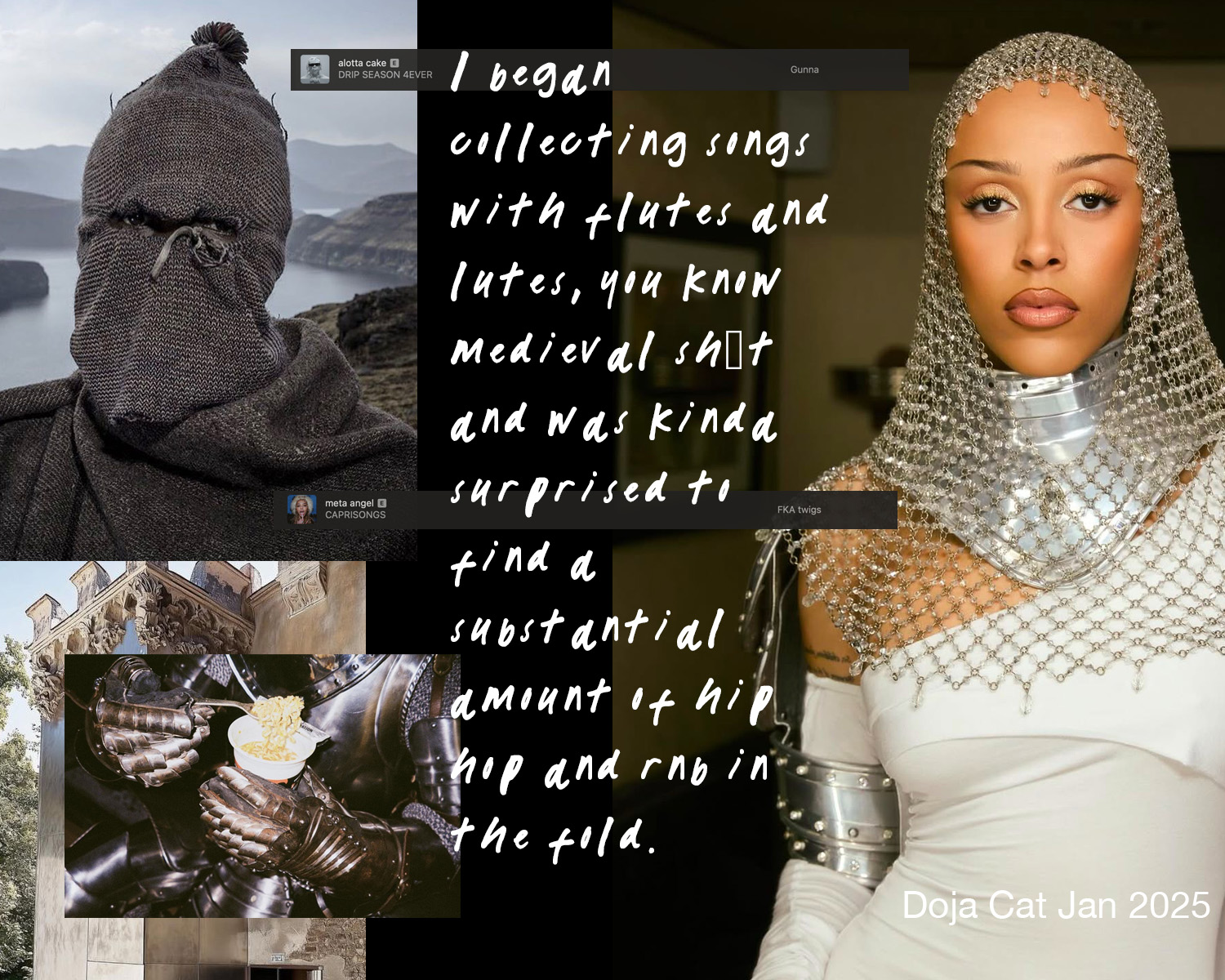
I devoured the entire article and made it my mission to track this forecast until 2029. Since then, I’ve been collecting mostly images but also writing that lends evidence supporting this case! When I talk about things going back to medieval times this is the root of what I’m referencing. Not to mention how medieval styles of dress and music continue to get referenced for modern works. I’m so into this research I began collecting songs with flutes and lutes, you know medieval sh*t and was kinda surprised to find a substantial amount of hip hop and rnb in the fold. Like PARTYNEXTDOOR’s “Showing You”.
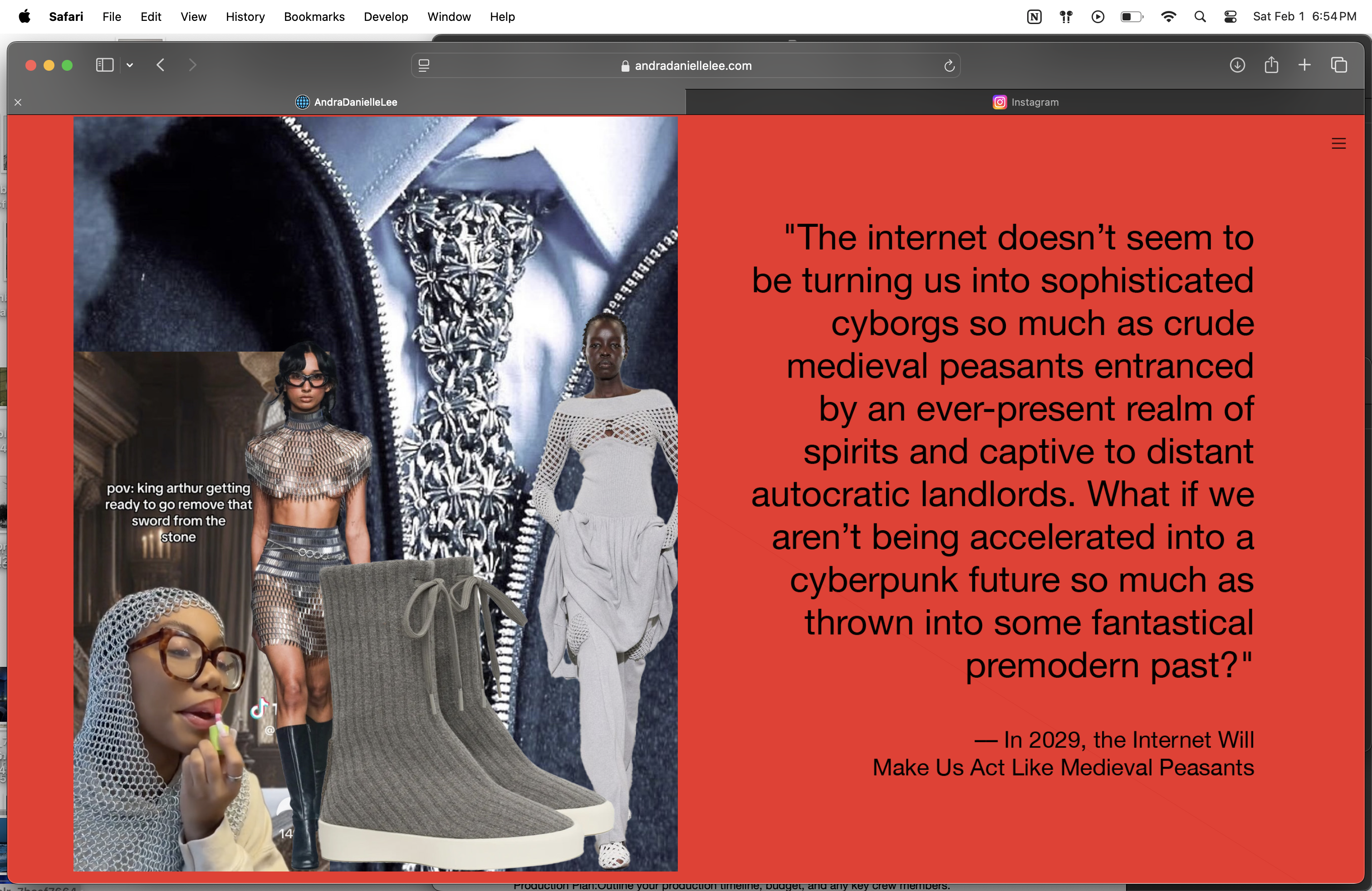
One of the things said in the article is that ,“The internet doesn’t seem to be turning us into sophisticated cyborgs so much as crude medieval peasants entranced by an ever-present realm of spirits and captive to distant autocratic landlords. What if we aren’t being accelerated into a cyberpunk future so much as thrown into some fantastical premodern past?”
![]()
![]()
When trad wives are afoot and words like Lore spring into action and renaissance fairs pop up on my feed I know this article is already, maybe, a bit right. Even if it’s a very literal representation of the medieval peasantry that’s said to return in 2029. While I’d hoped for a future more chrome in a futuristic way I think it’s a possibility it might be in a prince & pauper sort of way. Who can tell what’s real or fake anymore it’s really as if we’re living in a fantasy world where anything goes.
A.I seems like an increasingly enchanting layer added to the mix.
The inspiring article also highlighted the following: The structure of the internet is headed toward an arrangement the cybersecurity expert Bruce Schneier calls “digital feudalism,” through which the great landlords, platforms like Google and Facebook, “are becoming our feudal lords, and we are becoming their vassals.” This has become true but now OpenAi and other Computer generating programs are now lords we pay in water and energy to give us information and images and video.
In an article by
The Trend Report‘s Kyle Fitzpatrick he wrote, “the oligarchy has turned direct, the various kingdoms of the United States — And the world! — making them and their jesters known, as we the serfs and village people watch, dirtied and tired, hoping that the castle catches on fire so we can all be freed.”
![]()
It’s this sentiment that I know a lot of people are feeling right now and this furthers the argument that we are being forced in to peasantry by the very tools that were meant to propel us into the future.
Has it all been a hoax?
Trends and predictions have always been a look at the direction society is heading. Our technical blunders may have currently got us set back but there is still time to recover ground by 2029… or should I just start building my castle and moat?
![]()
I picture a sort of chivalry, courage, romance and magic when I think of the medieval times. While it’s this sort of imagery we see mimicked on screen, in music videos and fashion editorials things in reality the internet seems to be reviving the spirit of the peasant, the village idiot, and the imbecile king for certain.
Trend Report & Image Research by Andra Lee
I devoured the entire article and made it my mission to track this forecast until 2029. Since then, I’ve been collecting mostly images but also writing that lends evidence supporting this case! When I talk about things going back to medieval times this is the root of what I’m referencing. Not to mention how medieval styles of dress and music continue to get referenced for modern works. I’m so into this research I began collecting songs with flutes and lutes, you know medieval sh*t and was kinda surprised to find a substantial amount of hip hop and rnb in the fold. Like PARTYNEXTDOOR’s “Showing You”.
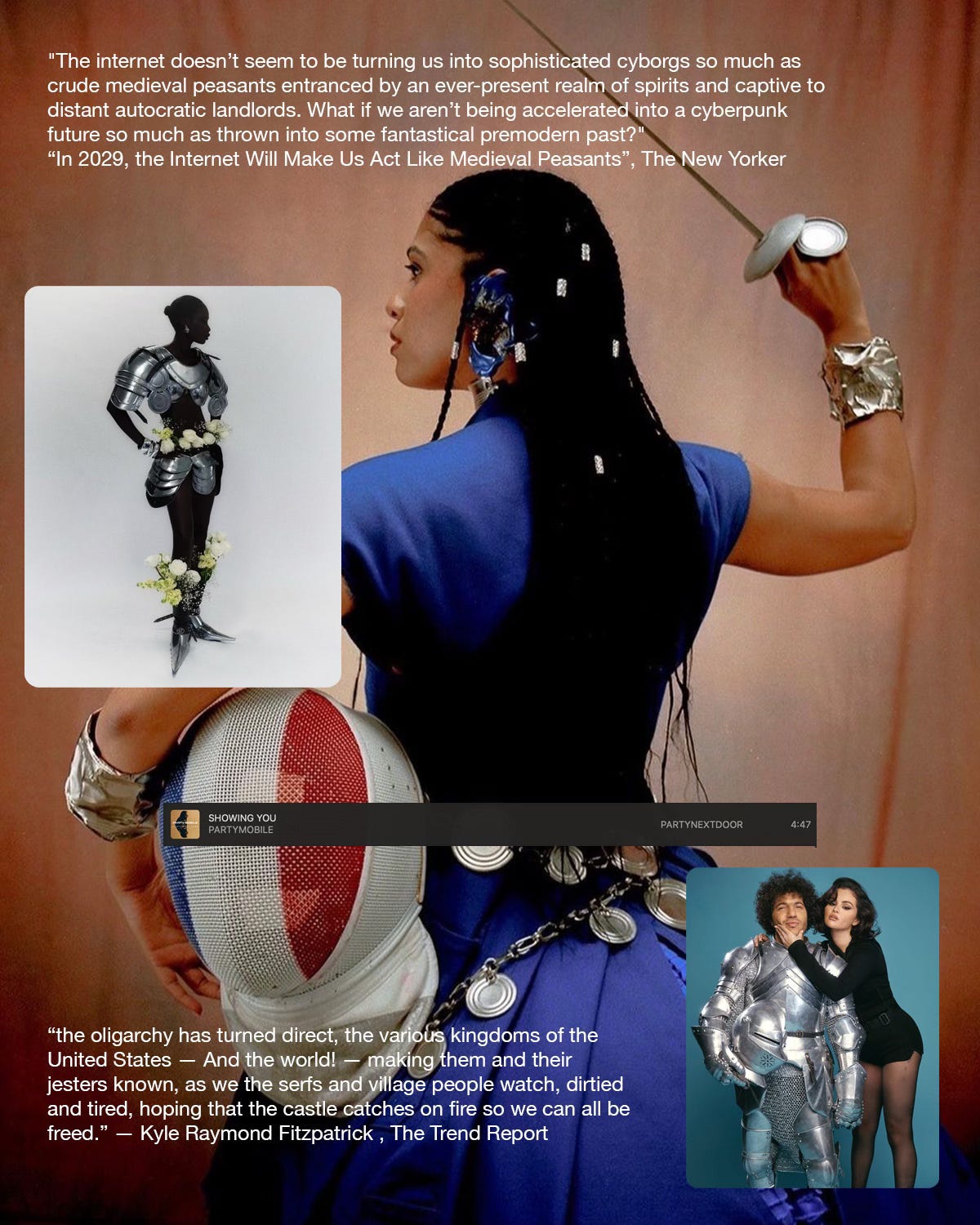
One of the things said in the article is that ,“The internet doesn’t seem to be turning us into sophisticated cyborgs so much as crude medieval peasants entranced by an ever-present realm of spirits and captive to distant autocratic landlords. What if we aren’t being accelerated into a cyberpunk future so much as thrown into some fantastical premodern past?”

When trad wives are afoot and words like Lore spring into action and renaissance fairs pop up on my feed I know this article is already, maybe, a bit right. Even if it’s a very literal representation of the medieval peasantry that’s said to return in 2029. While I’d hoped for a future more chrome in a futuristic way I think it’s a possibility it might be in a prince & pauper sort of way. Who can tell what’s real or fake anymore it’s really as if we’re living in a fantasy world where anything goes.
A.I seems like an increasingly enchanting layer added to the mix.
The inspiring article also highlighted the following: The structure of the internet is headed toward an arrangement the cybersecurity expert Bruce Schneier calls “digital feudalism,” through which the great landlords, platforms like Google and Facebook, “are becoming our feudal lords, and we are becoming their vassals.” This has become true but now OpenAi and other Computer generating programs are now lords we pay in water and energy to give us information and images and video.
In an article by
The Trend Report‘s Kyle Fitzpatrick he wrote, “the oligarchy has turned direct, the various kingdoms of the United States — And the world! — making them and their jesters known, as we the serfs and village people watch, dirtied and tired, hoping that the castle catches on fire so we can all be freed.”
It’s this sentiment that I know a lot of people are feeling right now and this furthers the argument that we are being forced in to peasantry by the very tools that were meant to propel us into the future.
Has it all been a hoax?
Trends and predictions have always been a look at the direction society is heading. Our technical blunders may have currently got us set back but there is still time to recover ground by 2029… or should I just start building my castle and moat?
I picture a sort of chivalry, courage, romance and magic when I think of the medieval times. While it’s this sort of imagery we see mimicked on screen, in music videos and fashion editorials things in reality the internet seems to be reviving the spirit of the peasant, the village idiot, and the imbecile king for certain.
Trend Report & Image Research by Andra Lee
Let’s examine the definition of the peasant to get us familiar with the term.
It is defined by the Cambridge English dictionary as a person who owns or rents a small piece of land and grows crops, keeps animals, etc. on it, especially one who has a low income, very little education, and a low social position.
What we’re living through now is of course not a literal regurgitation of the Middle Ages but a symbolic one. The digital age has restructured power; giving it to platforms, celebrities and of course governments instead of lords. Commerce now includes the service of attention and gaining influence. Referring back to the article that kicked this case off to begin with,
“You don’t “own” the software on your phone any more than a peasant owned his allotment, and when your car and your front-door lock are similarly enchanted, you can imagine a distant lord easily and arbitrarily evicting you”
It’s the trifecta of low income, little education and low social position that I think internet has emphasized. Let’s be real, the majority of social media users are spectators, observers, or flaneurs in search of romance and entertainment via a small screen and not impassioned organizers. We can see on platforms like X & Threads that people often, don’t use sources or really know the full scope of what they're blabbing about. In a way there is the performance of this sort of behavior of the peasant in digital spaces.
It would seem as though education and intellect have become less prized and reserved for only a select few.
This trifecta of low income, very little education and low social position implies that a peasant really has little power or authority and political impact –– at the mercy of their landlords and government. Does the internet enable us to mirror those qualities of a peasant? Are we scrolling for slop? Are people through time spent online becoming stupid and also apathetic about education in general? A, who needs learning when you have the internet sort of mentality?
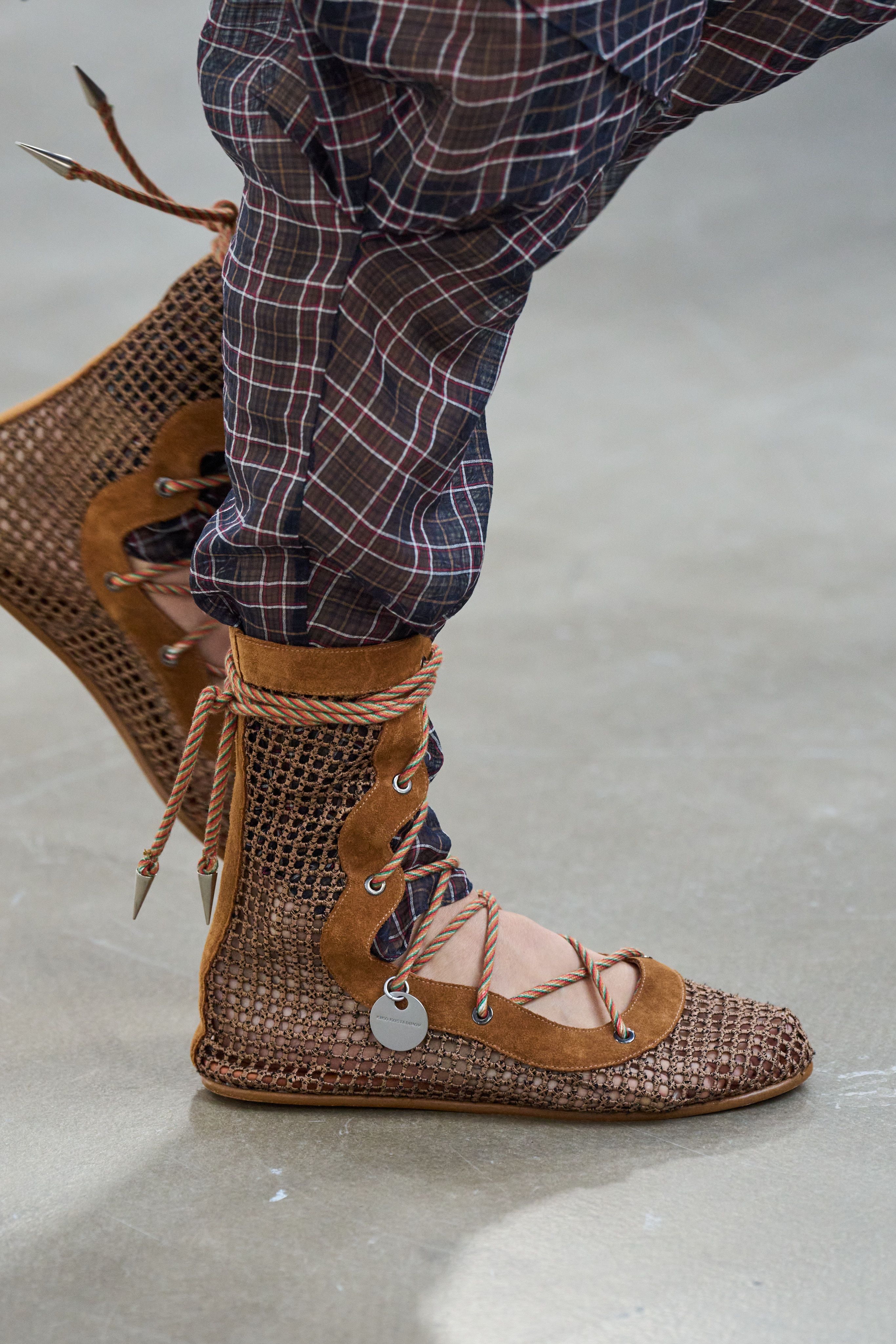
![]() Kiko Kostandinov S26
Kiko Kostandinov S26
I think what’s so interesting about the forecast is the use of the terms “Act Like Medieval Peasants” which is why I was keen to use the word perform to describe the peasantry. This level of interference from technology enables us to act out different characters online and one of those archetypes may very well be that of the peasant. We create memes about our disfortune, troll people for any given reason and there’s a sort of goofy jester bit where people create their own blooper reals and slapstick humor and sometimes dangerous stunts that end up in bodily harm all for the gram baby.
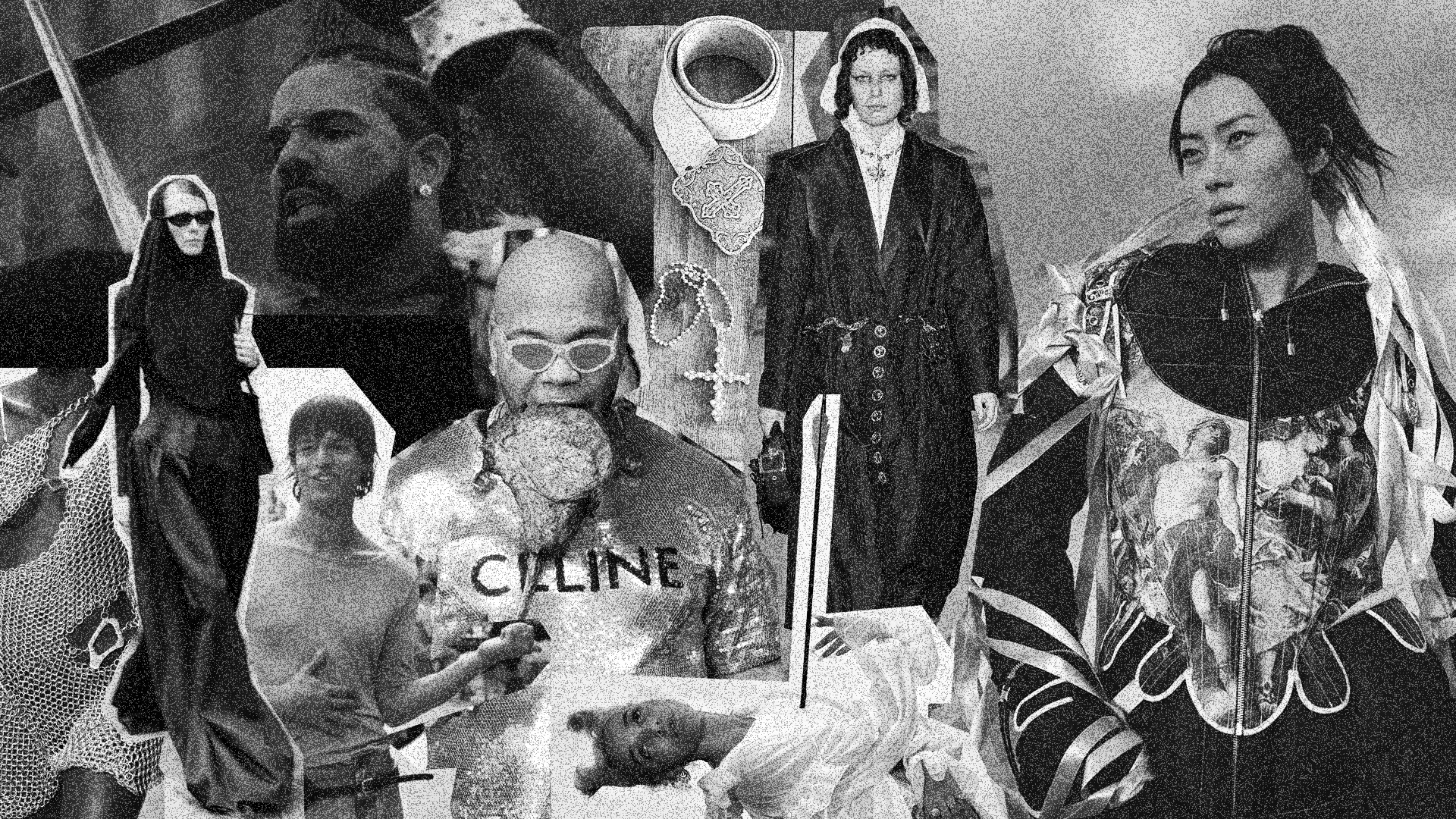
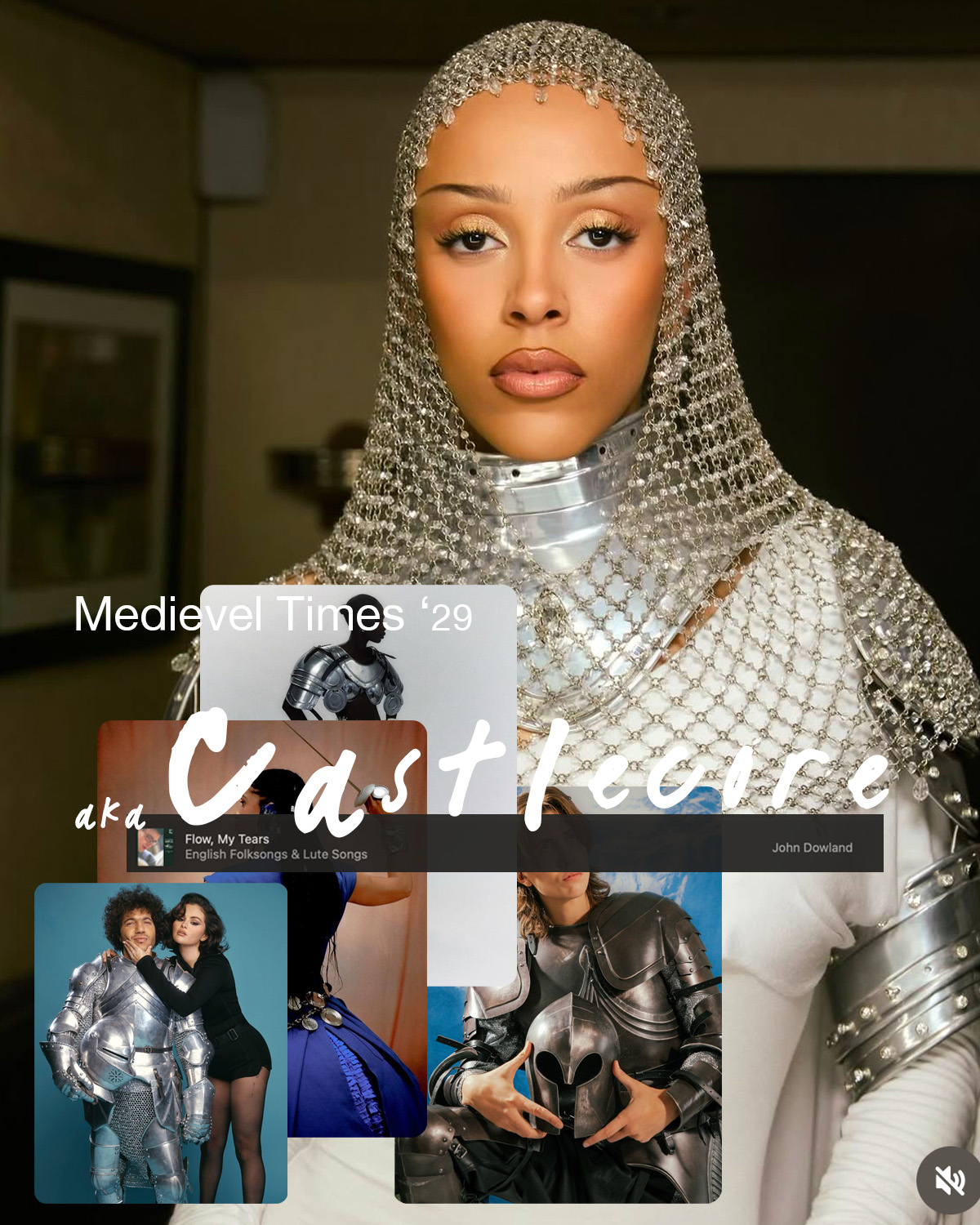
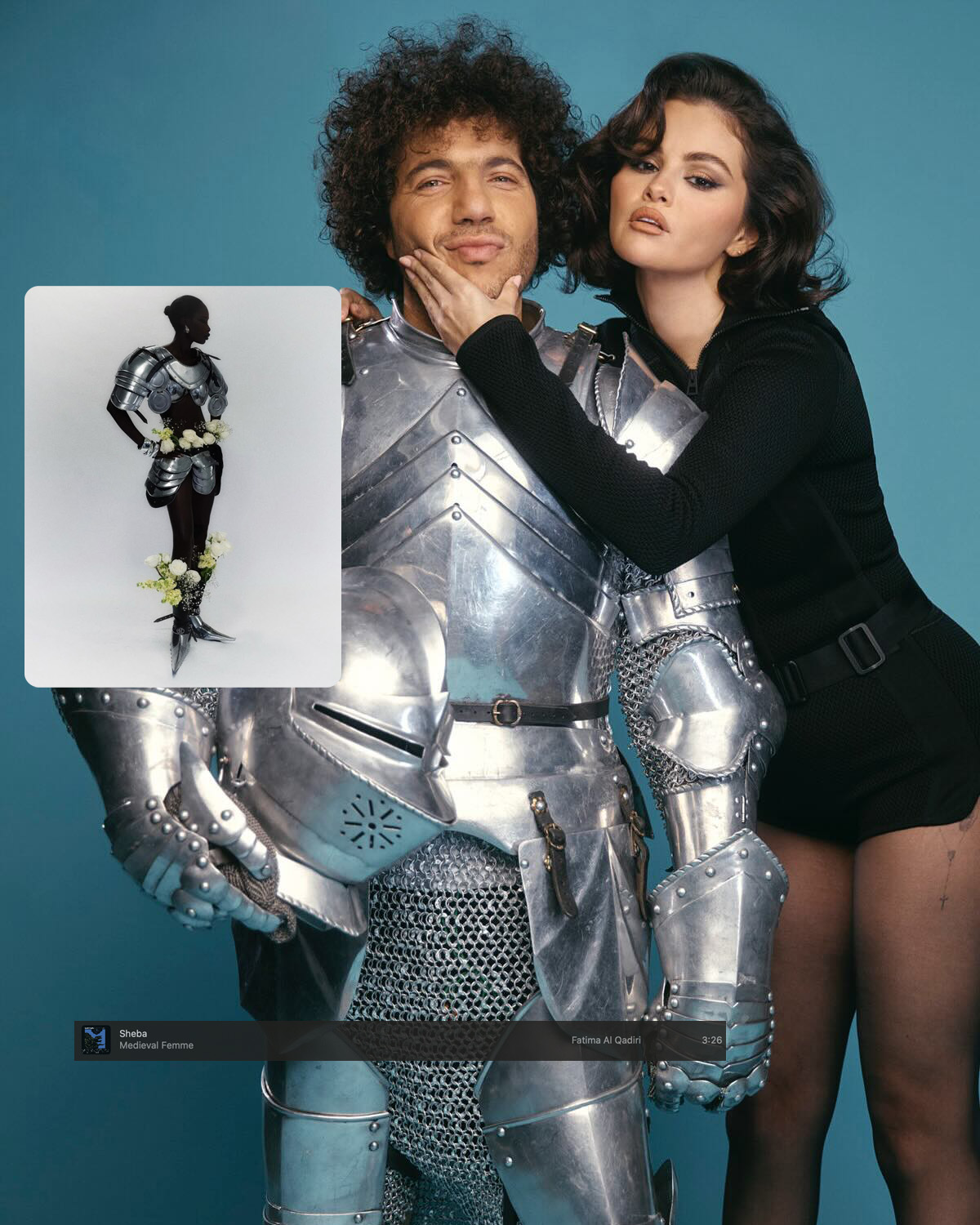
When studying abroad and taking a course in trend forecasting, I learned that the best way to track trends is to consume lots of media, art and entertainment in different formats. Then start combing through for overlap/trends across news, magazines, science, movies, fashion, art, culture, etc… So as i’ve been tracking this forecast I’ve come across clothing made in 2025 that harkens back to a medieval time. Celebrities donning knights armor in today’s magazines, music that has the pre-renaissance sound modernized by a trap beat.
The theory here is that trends permeate our society on many levels and there are indicators within our culture and activities. Here in the US the president’s slogan states a determination to bring back something old there seems to be a general expression of returning back to something better from the past. Isn’t it odd though that the time-period we’re being flung back to is the 5th to 15th century.
How long will we be in it? and will we experience a Renaissance period soon? Does history repeat it self in a cycle?
There are murmurs of a Renaissance period online, Beyonce certainly made a statement to that effect with RWT. I often look at my feed on substack and see the word peppered along the scroll.
And some suggest that more time offline is the cure for us peasants, and if that should be the case we’re not nearly out of the woods yet.
Elite Daily reports on Summer 2025
I’ve got 4 more years left to track this forecast, so we shall see what will be. I can’t imagine having much more to write on this topic for a while but this has been such a fun topic for me to dive into. If you want to do something fun but hard, create a long term project for yourself!
Thank you all for reading!
It is defined by the Cambridge English dictionary as a person who owns or rents a small piece of land and grows crops, keeps animals, etc. on it, especially one who has a low income, very little education, and a low social position.
What we’re living through now is of course not a literal regurgitation of the Middle Ages but a symbolic one. The digital age has restructured power; giving it to platforms, celebrities and of course governments instead of lords. Commerce now includes the service of attention and gaining influence. Referring back to the article that kicked this case off to begin with,
“You don’t “own” the software on your phone any more than a peasant owned his allotment, and when your car and your front-door lock are similarly enchanted, you can imagine a distant lord easily and arbitrarily evicting you”
It’s the trifecta of low income, little education and low social position that I think internet has emphasized. Let’s be real, the majority of social media users are spectators, observers, or flaneurs in search of romance and entertainment via a small screen and not impassioned organizers. We can see on platforms like X & Threads that people often, don’t use sources or really know the full scope of what they're blabbing about. In a way there is the performance of this sort of behavior of the peasant in digital spaces.
It would seem as though education and intellect have become less prized and reserved for only a select few.
This trifecta of low income, very little education and low social position implies that a peasant really has little power or authority and political impact –– at the mercy of their landlords and government. Does the internet enable us to mirror those qualities of a peasant? Are we scrolling for slop? Are people through time spent online becoming stupid and also apathetic about education in general? A, who needs learning when you have the internet sort of mentality?
 Kiko Kostandinov S26
I think what’s so interesting about the forecast is the use of the terms “Act Like Medieval Peasants” which is why I was keen to use the word perform to describe the peasantry. This level of interference from technology enables us to act out different characters online and one of those archetypes may very well be that of the peasant. We create memes about our disfortune, troll people for any given reason and there’s a sort of goofy jester bit where people create their own blooper reals and slapstick humor and sometimes dangerous stunts that end up in bodily harm all for the gram baby.
When studying abroad and taking a course in trend forecasting, I learned that the best way to track trends is to consume lots of media, art and entertainment in different formats. Then start combing through for overlap/trends across news, magazines, science, movies, fashion, art, culture, etc… So as i’ve been tracking this forecast I’ve come across clothing made in 2025 that harkens back to a medieval time. Celebrities donning knights armor in today’s magazines, music that has the pre-renaissance sound modernized by a trap beat.
The theory here is that trends permeate our society on many levels and there are indicators within our culture and activities. Here in the US the president’s slogan states a determination to bring back something old there seems to be a general expression of returning back to something better from the past. Isn’t it odd though that the time-period we’re being flung back to is the 5th to 15th century.
How long will we be in it? and will we experience a Renaissance period soon? Does history repeat it self in a cycle?
There are murmurs of a Renaissance period online, Beyonce certainly made a statement to that effect with RWT. I often look at my feed on substack and see the word peppered along the scroll.
And some suggest that more time offline is the cure for us peasants, and if that should be the case we’re not nearly out of the woods yet.
Elite Daily reports on Summer 2025
I’ve got 4 more years left to track this forecast, so we shall see what will be. I can’t imagine having much more to write on this topic for a while but this has been such a fun topic for me to dive into. If you want to do something fun but hard, create a long term project for yourself!
Thank you all for reading!